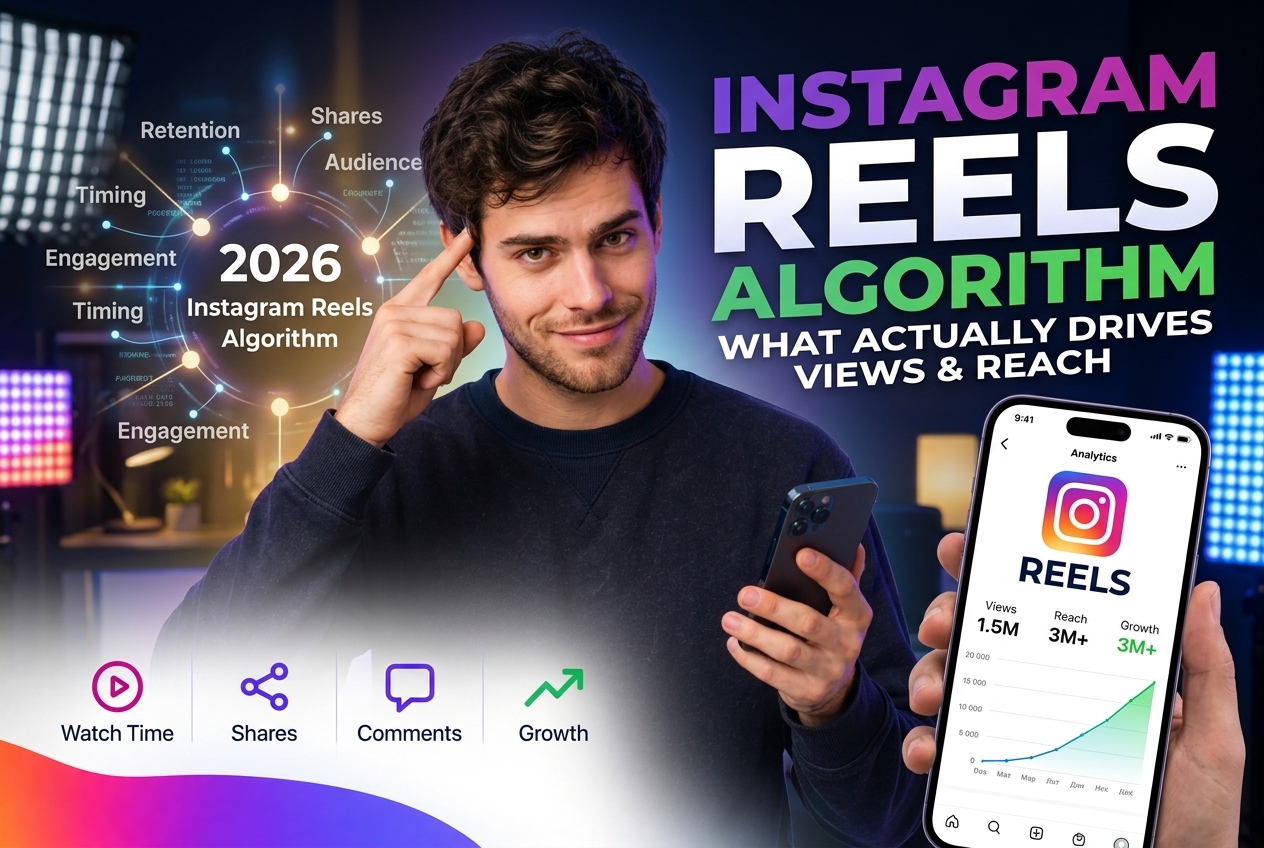
Reels is now the primary reach engine on Instagram. Understanding how the algorithm distributes Reels — what it rewards, what it suppresses, and what signals actually matter — is the difference between a post that reaches 500 people and one that reaches 50,000. Here's what the evidence shows in 2026.
How the Reels Distribution System Works
Reels go through a two-stage distribution process. Stage one: the algorithm shows your Reel to a small test audience — primarily your existing followers and a small slice of non-followers with similar interest signals. It measures early engagement in this window (typically the first 30-90 minutes). Stage two: based on that performance, the algorithm either expands distribution to broader non-follower audiences or limits the Reel to your existing base.
The implication is that Reels live or die in the first hour. A slow start almost never catches up through sustained engagement — the algorithm has already moved on. This makes your initial audience quality critical.
The Signals That Actually Drive Reach
Watch time and completion rate. These are the dominant signals. A Reel that gets watched to the end (or re-watched) tells the algorithm the content delivered on its promise. Target for 70%+ completion rate. Hooks matter enormously — the first 1-2 seconds determine whether someone keeps watching or scrolls.
Shares. Shares to Stories and DMs are weighted heavily because they represent active endorsement, not passive consumption. A Reel with a high share rate gets treated as content worth spreading beyond the original audience. Design Reels to be shareable — relatable, surprising, or practically useful.
Saves. Saves signal that the content has lasting value. Tutorial content, checklists, and "keep this for later" formats drive saves. The algorithm interprets saves as a quality signal distinct from entertainment value.
Comments — quality over quantity. Substantive comments (questions, opinions, stories) outweigh emoji-only comments as a signal. A Reel with 15 genuine comments may outperform one with 80 fire emojis.
Replays. The algorithm tracks how many times a viewer watches your Reel. Loopable content — where the ending connects back to the beginning, or where something is missed on first watch — naturally drives replays.
What the Algorithm Suppresses
Several content characteristics reduce Reels distribution:
The Follower Quality Problem
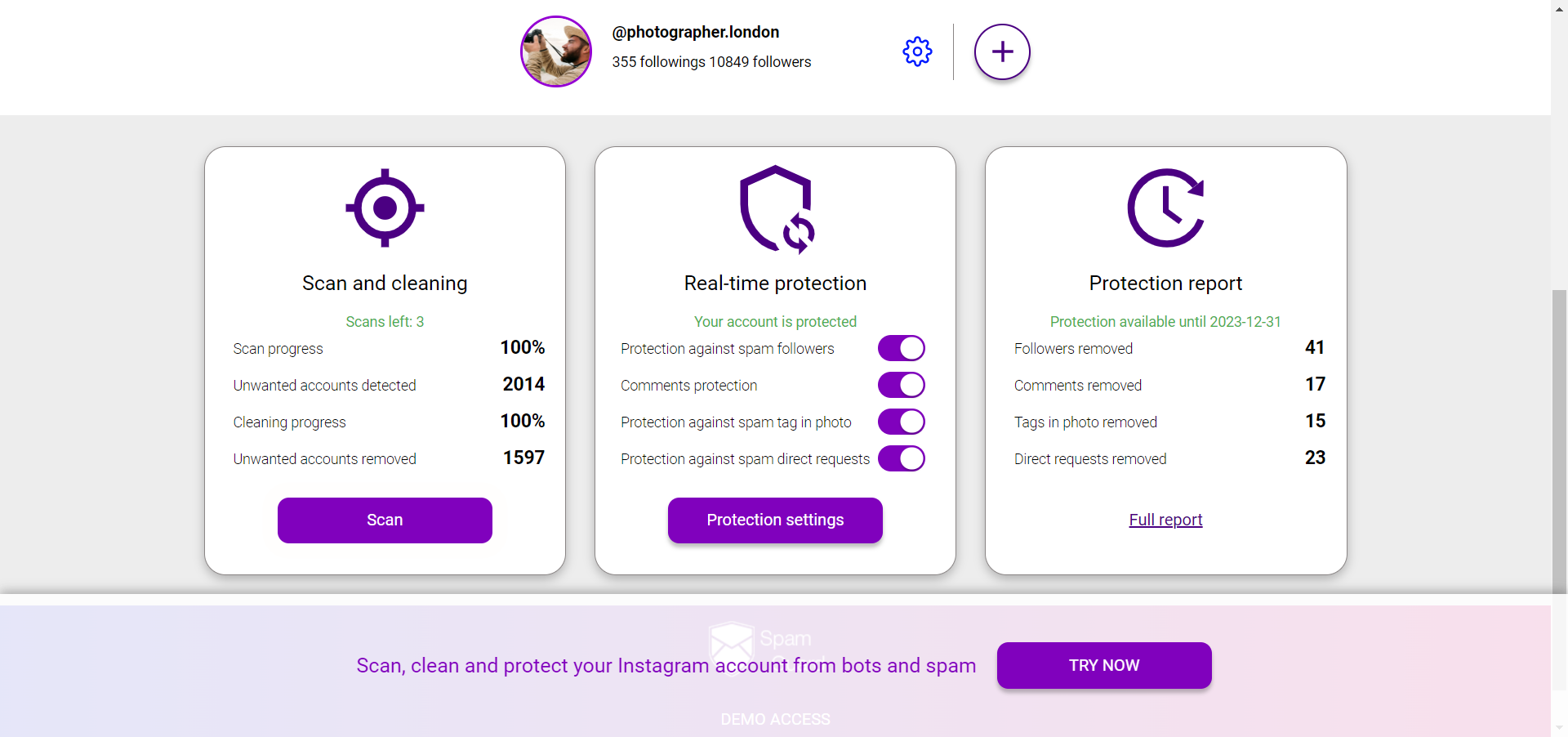
The first-hour test audience includes your existing followers. If a significant portion of your followers are inactive accounts or bots, your test audience skews toward non-engagement — even genuinely good content gets weak initial signals. The algorithm can't tell the difference between a bad Reel and a Reel shown to an audience that doesn't engage.
This is why follower quality directly impacts Reels reach. Regular audience audits with SpamGuard keep your follower base clean, which means your test audience is real people who actually watch. A clean 3,000-follower account consistently outperforms a 10,000-follower account with 40% inactive followers on Reels reach.
Audio and Trending Sounds
Using trending audio gives Reels a distribution boost — Instagram has an interest in promoting content that uses music licensed through its library, and it surfaces trending audio in the Reels feed as a discovery mechanism.
However, trending audio only helps if the content itself performs. A Reel with trending audio that gets low completion rate won't get sustained distribution. Audio is a helpful signal, not a distribution override.
Posting Frequency and Cadence
More Reels don't automatically mean more reach — in fact, posting too many Reels in a short window can cause them to compete against each other for your follower audience in the initial test phase. 3-5 Reels per week is generally the effective range for accounts in growth mode.
Consistency matters more than frequency. The algorithm develops a "baseline" expectation for your account based on historical performance. Accounts that post consistently get marginally preferential treatment in distribution compared to accounts that post sporadically.
What Doesn't Work Anymore
Tactics that were effective in earlier Instagram algorithm iterations but are now ineffective or counterproductive: