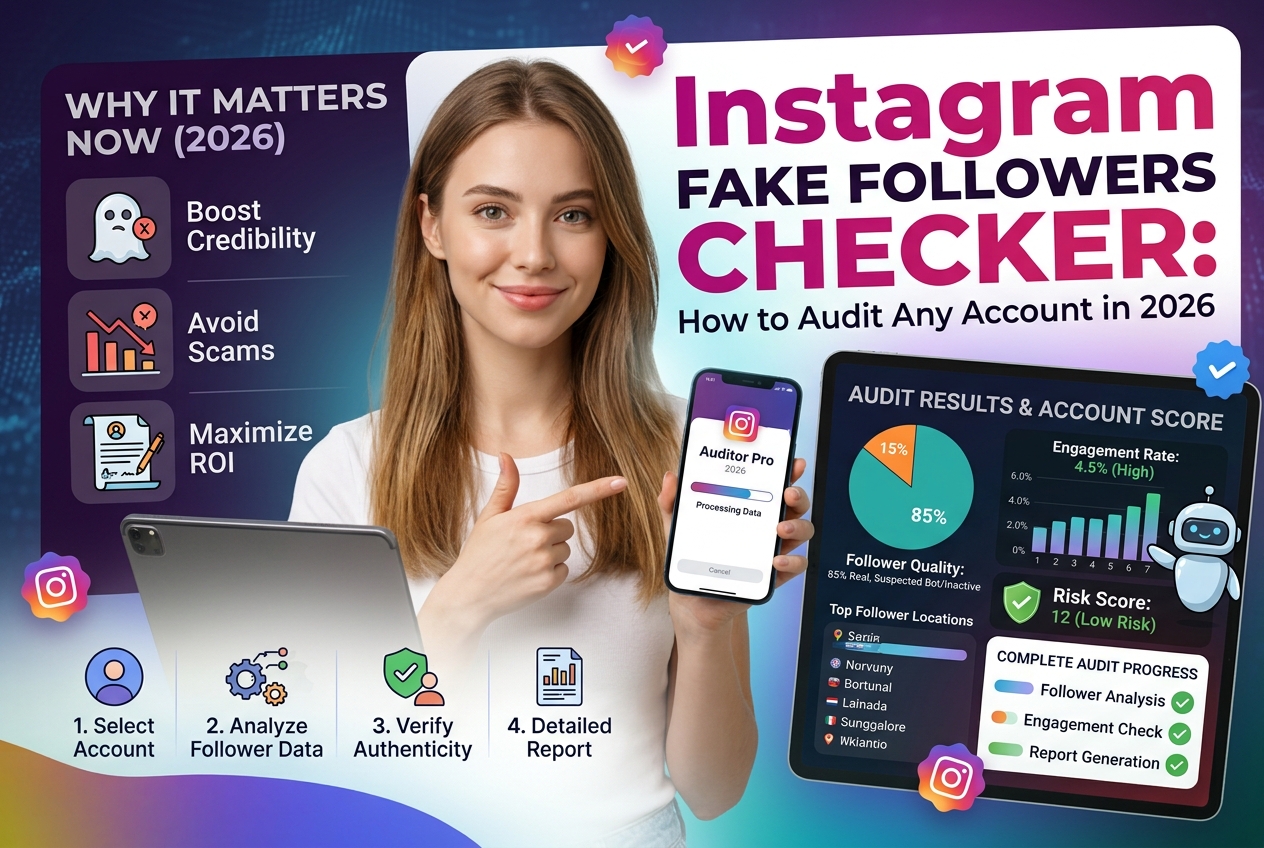
Knowing how to check an Instagram account for fake followers has become a standard skill for anyone working in influencer marketing, brand partnerships, or competitive research. The presence of inflated follower counts is widespread enough that buying followers without checking is now considered negligence. Here's a practical guide to auditing any account in 2026.
Why Fake Follower Audits Matter
Inflated follower counts affect everyone in the ecosystem. Brands paying for influencer placements based on reach that doesn't exist lose budget on campaigns that can't convert. Creators with artificially boosted numbers attract wrong-fit partnerships and damage long-term reputation when the gap between followers and engagement becomes obvious. Competitors with fake followings create false benchmarks that distort strategy.
The good news: fake followers leave consistent signals that are detectable through analysis, even without access to the account's internal analytics.
The Engagement Rate Test: First Signal
The fastest public check is engagement rate: divide average likes and comments per post by follower count. Realistic engagement rates in 2026 vary by account size:
An account showing 200K followers but averaging 400 likes per post (0.2% ER) is a strong signal of inflated numbers. This calculation takes 60 seconds on any public account.
Comment Quality Analysis
Volume of comments can be inflated alongside likes, but quality is harder to fake at scale. Look at the comment section of several recent posts:
Genuine communities generate comments that reference specific details: "That tip about X at 2:15 was exactly what I needed" or "This is different from what [other creator] said last week."
Follower Profile Analysis
Manually check 50-100 followers of any account. Signs of low-quality followers:
A healthy account's follower list should look like real people with consistent profiles, posts, and engagement histories.
Follower Growth Pattern
Legitimate audience growth is gradual and corresponds to content activity. Sudden spikes — thousands of followers gained in a single day or week without a corresponding viral event — indicate purchased followers. Tools that track follower history make this visible as dramatic vertical jumps on a growth chart.
Dedicated Audit Tools
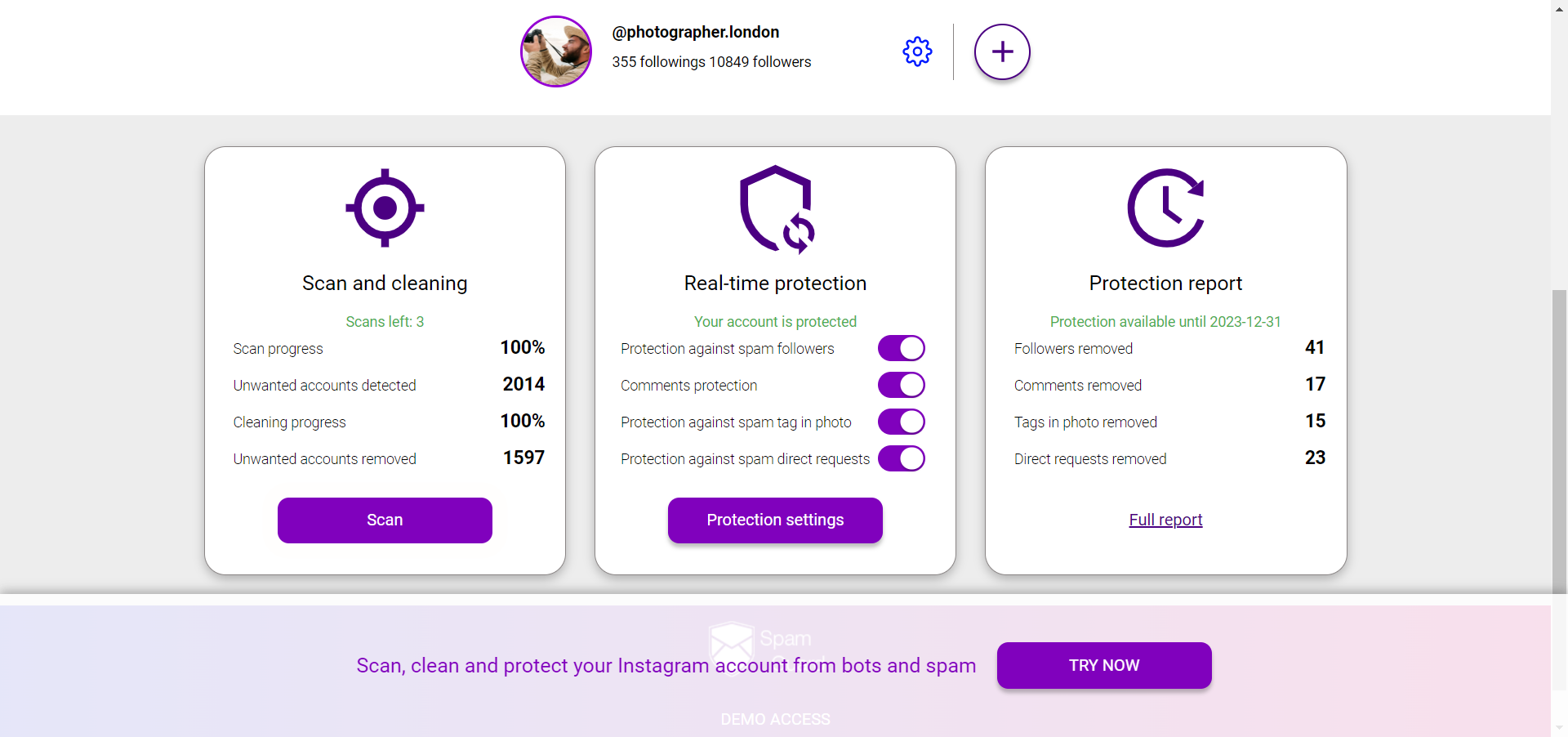
Manual checks establish suspicion. Systematic auditing requires tools that can analyze full follower lists, not just samples. SpamGuard provides a complete audience audit: it categorizes followers into bots, inactive accounts, mass-followers, and commercial spam accounts, showing the percentage breakdown and the specific accounts in each category.
This is the method used for your own account to identify and remove low-quality followers — but the same analytical approach applies when evaluating accounts you're considering for partnerships, measuring against as competitors, or researching for any other purpose.
Red Flags That Require No Tools
No single signal is definitive — some legitimate accounts have lower ER due to audience type or content format. But two or more signals together, especially combined with a tool-based analysis, provide reliable conclusions.