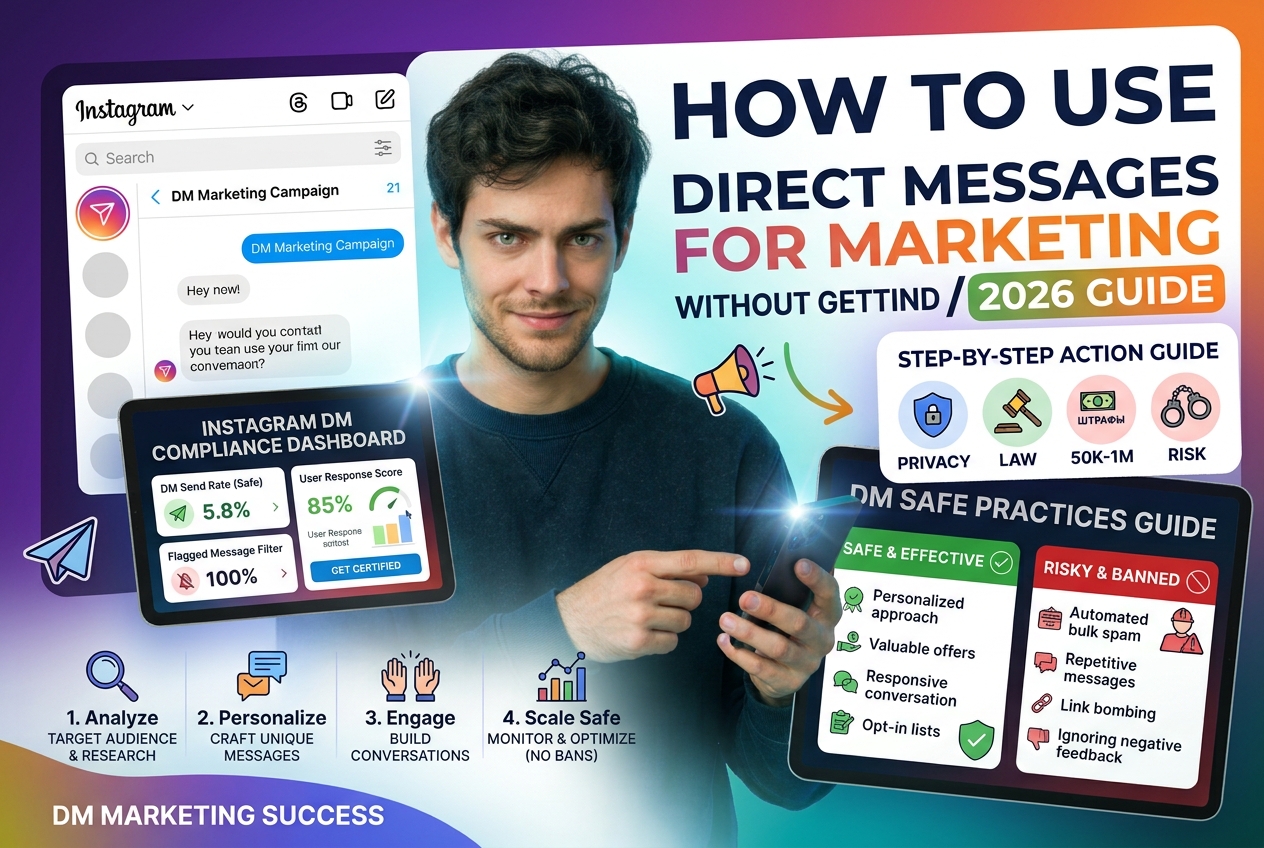
Instagram Direct is one of the most effective channels for sales and customer engagement — open rates on DMs regularly outperform email by a factor of three or four. It's also one of the fastest ways to get your account restricted if you approach it wrong. Here's how to use DM marketing effectively while staying within Instagram's limits.
Why Instagram DMs Work
The DM inbox is personal space. A message that lands there gets attention in a way that a post in a crowded feed doesn't. For businesses, this translates into higher conversion rates on sales conversations, support interactions, and lead follow-ups compared to almost any other channel on the platform.
The trade-off: Instagram guards this channel aggressively. Behavior that looks like mass outreach triggers automated restrictions quickly — sometimes within hours of starting a campaign.
What Gets Accounts Banned
Instagram's automated systems flag DM activity based on patterns, not just volume. The main triggers:
The restrictions range from a temporary DM block (a few hours) to permanent action block on the account. Repeated violations escalate the severity.
Safe DM Marketing: The Warm Audience Rule
The most reliable way to avoid restrictions is to DM people who already know you exist. This means:
Cold outreach to accounts that have never interacted with you is the highest-risk approach. If you're going to do it, keep volume very low (5-10 per day), personalize every message, and target accounts that actively engage with content similar to yours.
Message Volume Limits
Instagram doesn't publish official DM limits, but patterns from account restrictions suggest safe ranges for established accounts (6+ months old, regular activity):
New or recently reactivated accounts should start at 5-8 new DMs per day and increase gradually over several weeks.
Templates vs. Personalization
Identical copy-paste messages are a primary trigger for restrictions. Instagram's systems detect text similarity across messages from the same account. The solution isn't to write every message from scratch — it's to vary the text meaningfully.
Effective approach: build 4-6 variations of each message template, rotate between them, and include one genuinely personalized element (referencing their recent post, their username, or something specific to their account). This breaks the pattern-matching while keeping your workflow manageable.
Monitoring Account Health
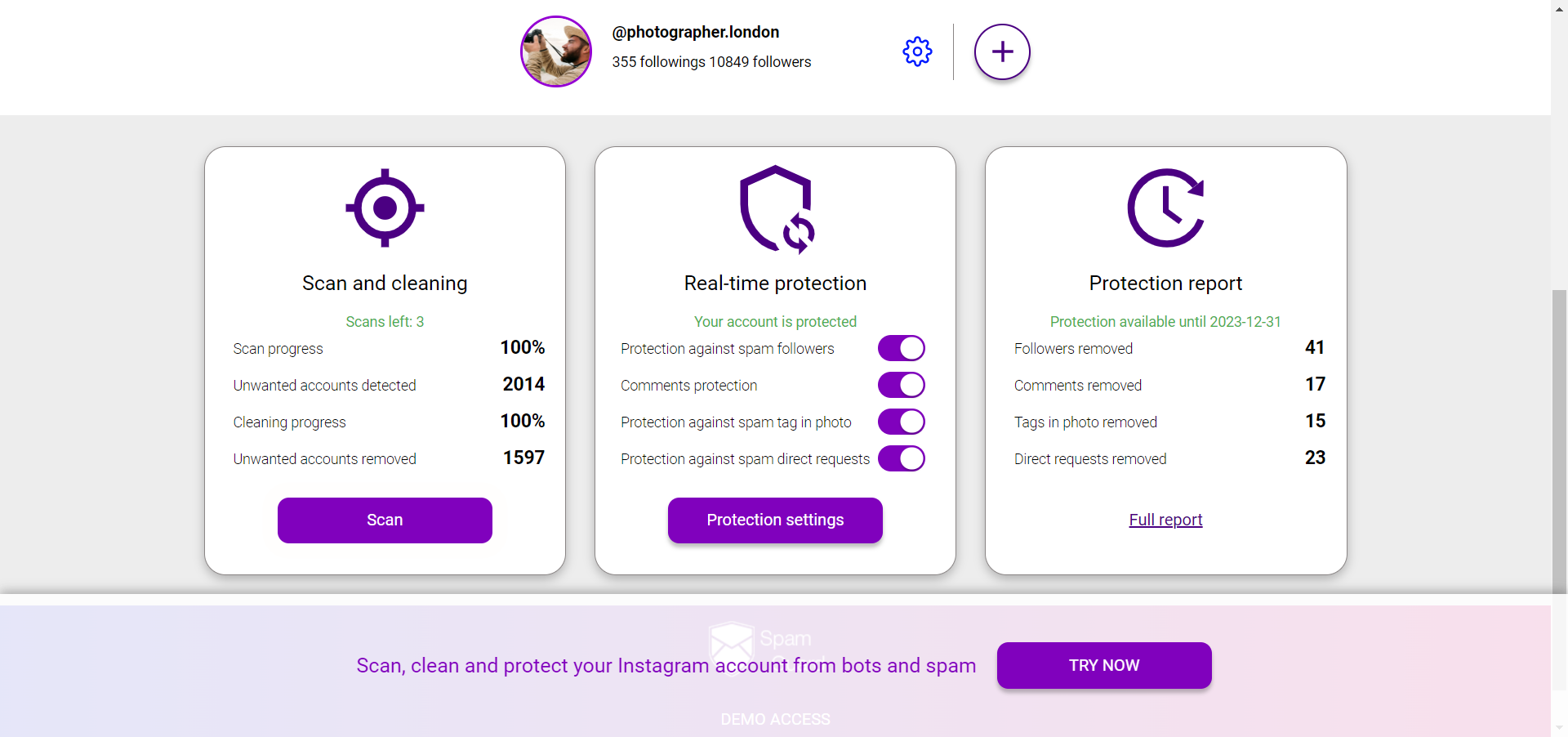
DM restrictions often follow a pattern of gradual account health decline before the actual block. Tracking metrics like reach, engagement rate, and follow/unfollow activity gives early warning. SpamGuard monitors account health and flags unusual patterns — useful for catching problems before they result in a restriction rather than after.
If you receive an Action Block on DMs: stop all DM activity immediately for 48-72 hours, don't try to work around it with a different device or account, and reduce your daily volume significantly when you resume.
The Long Game: Building DM Relationships
The accounts that use Instagram DMs most effectively long-term aren't running outreach campaigns — they're building response-oriented content that drives inbound DMs. Story questions, "DM me for X" calls to action in posts, poll stickers that invite follow-up — these generate DM conversations where you're responding, not initiating, which carries zero restriction risk.
This inbound approach scales better anyway: a post or Story that generates 50 DMs is more valuable than manually sending 50 cold messages, with better conversion rates and no restriction risk. Clean account health — including removing bot followers that dilute your reach — is foundational to making this work. SpamGuard handles the audience side of this.