Instagram's Collab feature allows two accounts to co-author a single post or Reel, with the content appearing on both profiles simultaneously. Both accounts' followers see the content in their feeds, both accounts receive all engagement on the same post, and both are credited as authors. For accounts looking to expand their reach without an advertising budget, Collabs are one of the most effective tools available in 2026.
This guide covers how Collabs work mechanically, how to find the right partners, how to pitch the collaboration, and what the audience quality considerations are that determine whether a Collab actually delivers on its reach potential.
How Instagram Collabs Work
A Collab post is initiated by one account (the primary author) who invites a second account as a collaborator when creating the post. The invited account receives a notification and can accept or decline. If accepted, the post appears on both profiles as if both accounts created it.
Key mechanics:
Collabs work for both feed posts and Reels. Reels Collabs are generally more effective for reach because Reels already receive recommendation-based distribution — the Collab multiplies the initial distribution pool.
[Screenshot: Instagram Collab post interface: how the invite appears and how the co-authored post displays on both profiles]
Why Collabs Beat Shoutouts for Reach
The traditional reach-expansion method is the shoutout: Account A posts content mentioning Account B, and Account B does the same. Both posts appear separately on each profile.
Collabs outperform shoutouts for several reasons:
[Screenshot: Reach comparison: traditional shoutout vs Collab post — engagement and new follower acquisition]
Finding the Right Collab Partner
The value of a Collab is entirely dependent on the quality and relevance of the partner account. Three criteria determine whether a Collab will deliver meaningful results:
1. Overlapping but non-competing audience
The ideal Collab partner serves the same audience from a different angle. A fitness coach and a nutritionist. A travel photographer and a luggage brand. An SMM specialist and a copywriter who works with content creators.
Overlapping audiences mean new followers from the Collab are genuinely interested in the inviting account's content. Non-competing means neither account risks losing followers to the other.
2. Comparable engagement quality, not just follower count
A partner with 50,000 followers and 0.5% engagement rate will deliver fewer real impressions than a partner with 8,000 followers and 6% engagement rate. Before reaching out, check the potential partner's recent posts for comment quality, response patterns, and consistency of engagement.
3. Content style compatibility
A Collab post appears on both profiles. If the visual style, tone, or quality level is significantly different between accounts, the Collab will feel out of place on one of them. Prioritize partners whose content aesthetic is compatible with yours — not identical, but compatible.
How to Pitch a Collab
Most Collab pitches fail because they are vague or framed entirely around the pitcher's benefit. A successful pitch is specific and frames mutual value:
Example structure: 'I've been following your work on [topic] — especially [specific post]. My audience of [X] followers is interested in [topic overlap]. I'm planning a Reel on [specific angle] and think it could work well as a Collab. Would you be open to discussing?'
Collab Content That Performs Well
Not all content types work equally well as Collabs. The formats that consistently drive the best combined reach:
[Screenshot: Example: high-performing Collab Reel format — dual perspective structure]
How Audience Quality Affects Collab Results
A Collab multiplies reach across both accounts' follower bases. But if one account has a large proportion of ghost followers or bot accounts, the multiplication effect is partially wasted — those followers do not engage with the Collab post, and the algorithm's initial response rate is lower than the combined follower count would suggest.
This matters in practice: an account with 10,000 followers but 35% ghost followers effectively contributes the engagement signal of a 6,500-follower active account to the Collab's initial distribution test. A Collab partner assessing the account by follower count alone would expect more reach than is actually delivered.
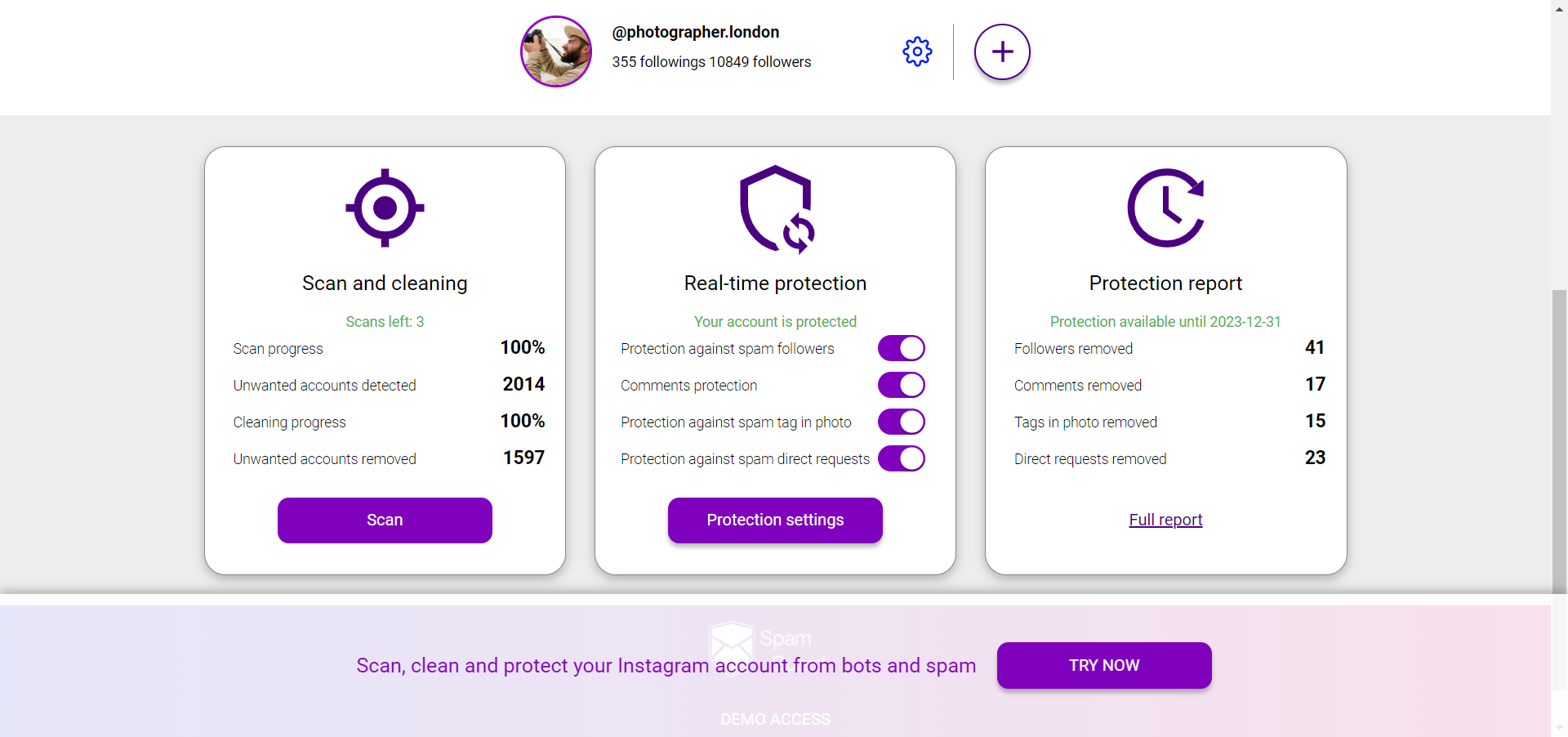
[Screenshot: SpamGuard account audit: active vs ghost vs bot follower breakdown affecting real Collab reach potential]
SpamGuard identifies ghost followers and bot accounts through behavioral analysis — posting activity, login recency, interaction patterns — and removes them in safe batches. After cleanup, the account's effective reach per post improves, making it a more valuable Collab partner and delivering better results from each collaboration.
Before pursuing Collab partnerships, audit your follower quality at SpamGuard. A clean audience means your side of the Collab delivers genuine reach — and makes partner accounts more willing to collaborate.
Tracking Collab Performance
After a Collab post goes live, track these metrics separately from regular posts:
Use this data to evaluate whether the Collab partner's audience was genuinely relevant. A Collab that brought 200 new followers but zero profile visits from the partner's side suggests the audiences did not overlap as expected.
Conclusion
Instagram Collabs are one of the highest-leverage organic growth tools available in 2026. A well-matched Collab doubles the initial distribution pool, creates mutual credibility, and places content in front of a new audience that is already interested in the topic — without advertising spend.
The foundation for effective Collabs is a clean, engaged follower base. Accounts with high ghost follower ratios underdeliver on Collabs because the initial engagement signal is weaker than the follower count implies.
Optimize your Collab reach potential by auditing your audience at spamguardapp.com. The audit is free and shows exactly how much of your current follower base is actively contributing to your reach.