Engagement rate is the metric Instagram uses to decide how widely to distribute your content. A post with strong early engagement gets pushed to more people; a post that generates weak signals stays within your existing audience. In 2026, with organic reach more competitive than ever, improving ER is one of the highest-leverage things you can do for account growth.
There are two categories of ER improvement: increasing the quality of your content and interactions, and improving the quality of your audience. Most guides focus on the first category and ignore the second. Both matter.
Understanding What Counts as Engagement
Instagram's algorithm weights different engagement signals differently:
When optimizing for ER, optimize for saves and comments first. A post with 20 saves and 15 comments will typically outperform a post with 200 likes and 2 comments.
Content Strategies That Drive Saves
Saves happen when content has utility beyond the moment of viewing — something the person wants to reference later. Content formats that consistently generate saves:
Reference content
Checklists, step-by-step guides, tool comparisons, templates. The person saves because they'll need the information again. Examples: '7 hashtag research steps', 'content calendar template', 'captions that convert'.
Dense carousels
Multi-slide posts where each slide adds new information. The person saves to go back through all the slides. A 10-slide carousel on a complex topic generates 3-5x more saves than a single image with the same information in the caption.
Numbers and specifics
Vague advice doesn't get saved. 'Post consistently' doesn't get saved. 'Post at 7pm on Tuesday and Thursday based on your audience analytics' gets saved. The more specific and actionable, the higher the save rate.
Strategies That Drive Comments
Comments require effort, which means your content needs to provide a clear reason to respond:
Respond to every comment within the first hour. This extends the comment thread, signals activity to the algorithm, and creates a reason for others to join the conversation.
Posting Time and Consistency
Post when your specific audience is active, not at generic 'best times'. Check your Instagram Insights under Audience → Most active times. The optimal window is usually 30-60 minutes before peak activity, giving time for initial engagement to build before the largest wave of your audience comes online.
Consistency matters more than frequency. An account that posts 3 times per week, every week, consistently outperforms one that posts 7 times one week and disappears for two weeks.
The Audience Quality Factor
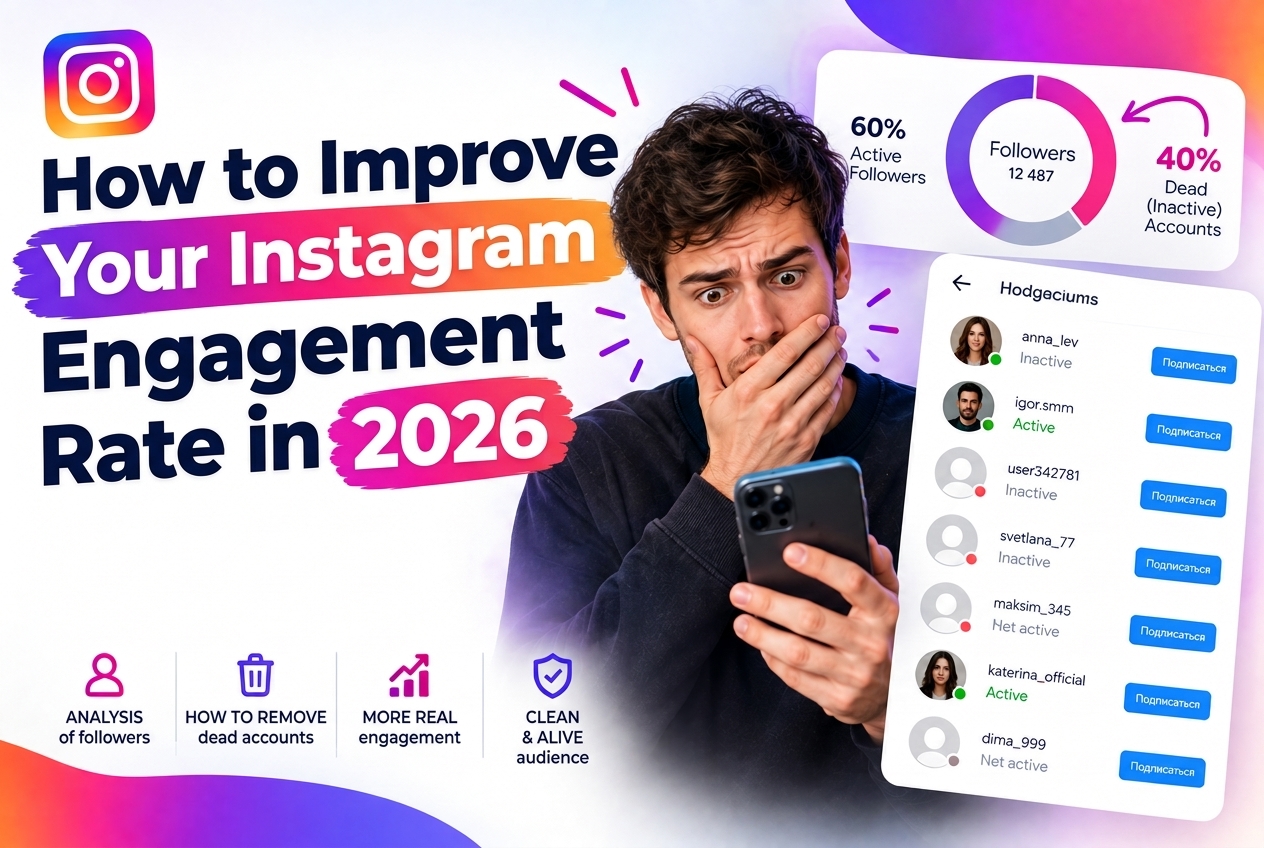
Here's the part most guides skip: your ER is a ratio. If the denominator (follower count) includes a large number of accounts that will never engage — bots, inactive accounts, mass-followers with 5,000 subscriptions who never see their feed — every post starts at a disadvantage.
A 10,000-follower account with 2,000 bot followers and 3,000 inactive accounts effectively has 5,000 real followers. Its ER is calculated against 10,000. This systematically underreports engagement and tells Instagram the content isn't resonating — when the real problem is audience composition.
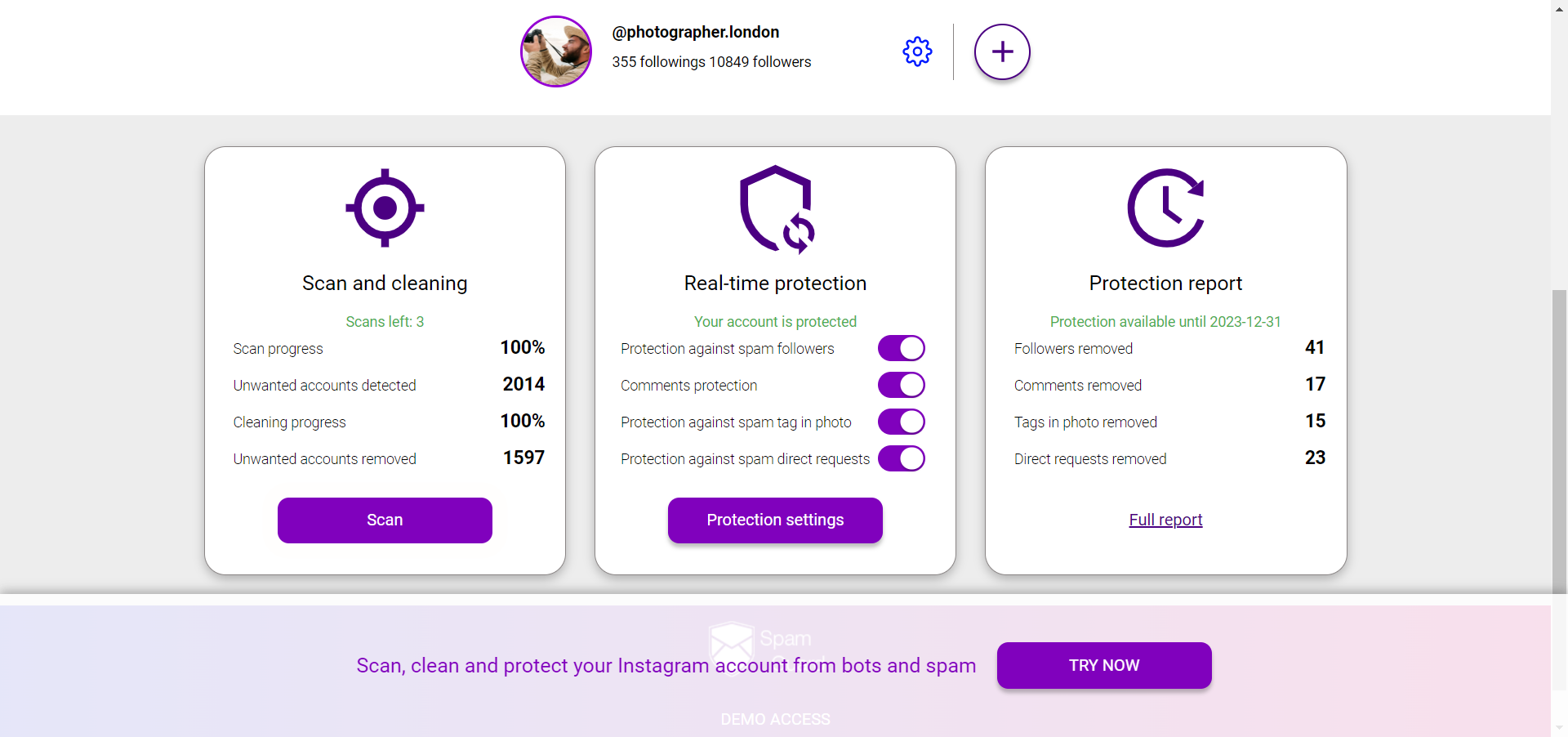
Regular audience audits fix this. SpamGuard analyzes your followers and classifies them: bots, inactive accounts, mass-followers, commercial accounts. You can then remove the accounts dragging down your ER. The result: your next post goes out to an audience that's a higher percentage active, and your ER improves without any change to your content.
This isn't a one-time fix. Accounts that use any form of audience growth will accumulate low-quality followers over time. Running an audit every 4-6 weeks keeps your audience quality — and your ER — consistently healthy.
Putting It Together
An ER improvement strategy that works in 2026:
Start with the audience audit — it's the change that improves ER most immediately: SpamGuard.