For accounts struggling to generate comments, the usual advice is to 'ask questions.' That advice is incomplete. Question prompts work, but only as one element of a broader approach. This guide covers the full picture: why some posts get comments and others don't, what tactics reliably move the needle, and what underlying account issues can suppress comments regardless of content quality.
Why Comments Matter More Than Other Metrics
Instagram's algorithm in 2026 uses a multi-signal system to evaluate content quality before deciding how broadly to distribute it. The signals are not weighted equally:
An account that generates consistent comments on every post is signaling to the algorithm that its audience actively participates — which leads to broader distribution across all content types, not just the post that received comments.
What Makes a Post Commentable
Before looking at tactics, it helps to understand why people comment on some posts and not others. Three psychological triggers drive most comments:
Posts that generate no comments are usually either too neutral (no position, no invitation), too abstract (the viewer has no personal connection to the topic), or too complete (the viewer has nothing to add).
Tactics That Reliably Increase Comments
1. Ask a specific question, not a generic one
'What do you think?' generates fewer comments than a question with a constraint. Compare:
Specific questions lower the cognitive barrier to responding. The viewer doesn't have to generate an answer from nothing — they just have to pick a side or recall an experience.
2. Take a clear position
Neutral, balanced content rarely gets comments. Content that takes a stance — 'this is wrong and here's why' or 'this approach is underrated' — invites responses from both people who agree and people who disagree.
This doesn't require being controversial. It requires being specific. 'Hashtags are useless' invites more comments than 'hashtags have mixed results.' The former gives people something to react to.
3. Use the first comment strategically
Posting a thoughtful comment from the account itself within the first five minutes of publishing serves two purposes: it signals to followers that the account is present and responsive, and it models the type of response the post is looking for. When people see a specific, substantive first comment, they are more likely to reply to it or match its depth.
4. Reply to every comment, especially early
Accounts that respond to comments get more comments. The behavior reinforces that commenting leads to interaction, not silence. Early replies also keep the comment thread active — Instagram's algorithm notices sustained comment activity and may extend the post's distribution window.
Reply within the first two hours of publishing. Later replies still help, but the early window matters most for algorithmic distribution.
5. Use carousels and multi-slide content
Carousel posts require multiple taps to read, which extends time-on-post. The longer a viewer spends on a post, the more likely they are to engage with it. Additionally, carousels often end with a slide that directly prompts a response — 'Slide 5 of 8: which of these applies to you?'
In 2026, carousels consistently outperform single-image posts for comment generation across most niches.
6. Respond to comments with questions
When someone comments, respond with a follow-up question directed at that person. This turns a single comment into a thread and increases total comment count without requiring new people to engage. A post with three commenters and eight comment exchanges looks more active than a post with eight commenters and eight comment exchanges.
7. Create content that acknowledges common experiences
'Tell me you're a [profession/situation] without telling me you're a [profession/situation]' formats generate recognition-based comments. Content that accurately describes a shared experience — a frustration, a habit, a situation — prompts 'this is literally me' comments from viewers who feel seen.
The Audience Quality Problem
All of the tactics above assume a baseline condition: that the account's followers are real, active people who are capable of commenting. When a significant portion of followers are bot accounts, ghost followers, or long-inactive users, comment rates remain low regardless of content or prompting strategy.
This is a common situation for accounts that have been active for more than a year. Ghost followers accumulate through old follow-for-follow campaigns, post-viral follower spikes, and automated bot activity. They do not comment. They do not like. They simply occupy space in the follower count, inflating the denominator against which engagement rates are measured.
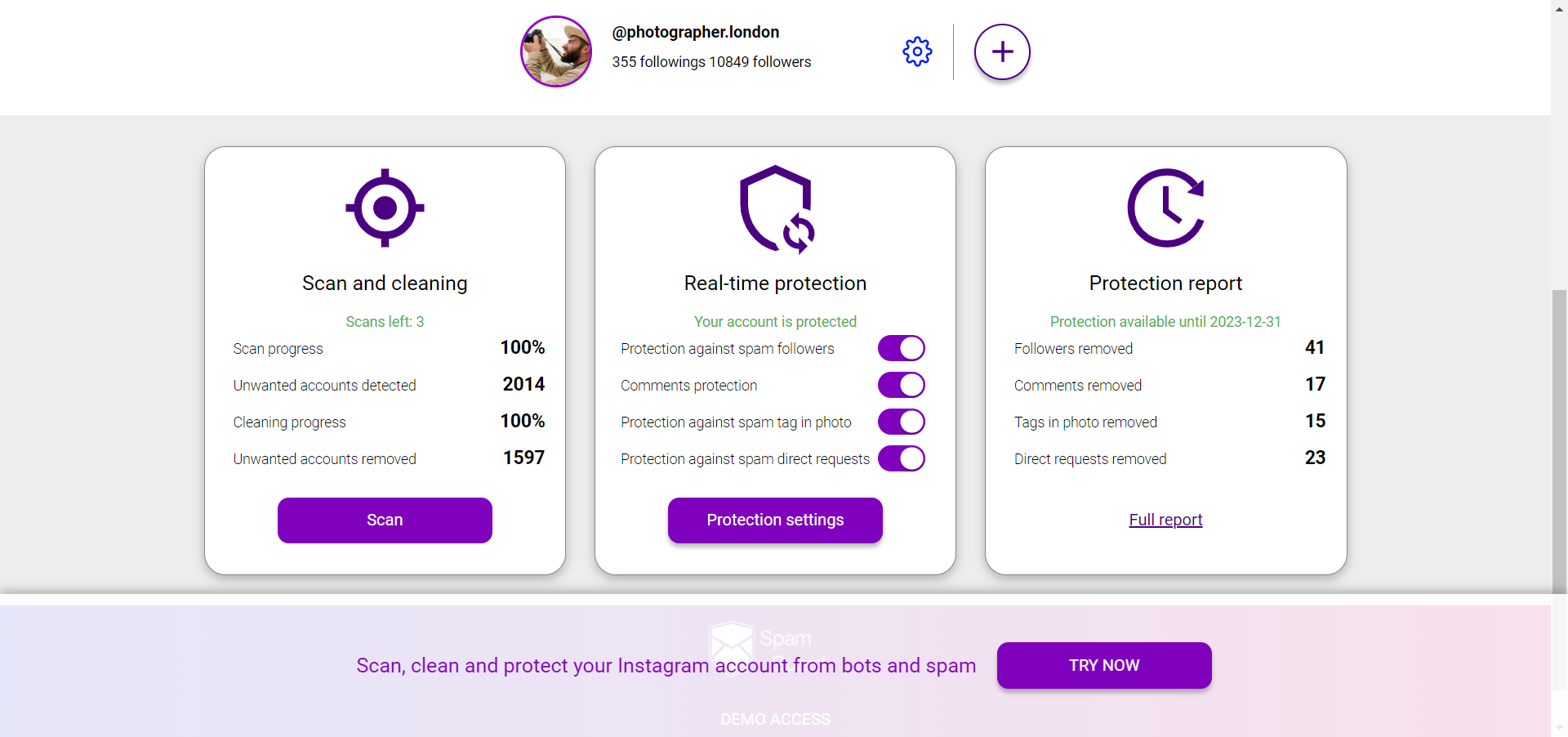
[Screenshot: SpamGuard follower audit: breakdown of active vs ghost vs bot followers]
SpamGuard identifies ghost followers and bot accounts through behavioral analysis — posting frequency, login recency, engagement history — and removes them in safe batches. After cleanup, the remaining audience is smaller but genuinely participatory. Comment rates typically improve within three to six weeks as the algorithm receives cleaner engagement signals.
Run a free follower audit at SpamGuard before investing in comment-generation tactics. If the audience quality problem isn't addressed first, no prompting strategy will compensate.
What Not to Do
Conclusion
Getting more comments requires two things working simultaneously: content that gives people a reason to respond, and an audience that is genuinely present and engaged. Tactics like specific question prompts, taking clear positions, and early replies address the first condition. Maintaining a clean follower base addresses the second.
If comment rates remain low despite content improvements, the issue is likely audience quality. Check the follower base at spamguardapp.com — the audit is free and takes a few minutes.