Growing an Instagram account without a clearly defined target audience is one of the most common reasons good content underperforms. Content created for everyone resonates with no one. The algorithm distributes posts based on early engagement signals — and that engagement only materialises when the right people see the content first.
This guide covers the practical methods for identifying and locating a target audience on Instagram in 2026, how to verify that the audience being attracted is actually the intended one, and why follower base quality determines whether any targeting strategy delivers real results.
Step 1: Define the Audience in Behavioral Terms
Broad demographic definitions — 'women 25–45' or 'small business owners' — are starting points, not finished audience definitions. A useful definition answers these questions:
The more specific the answers, the easier it becomes to create content that generates the engagement signals the algorithm rewards.
Step 2: Find Where the Audience Already Exists
On Instagram, the target audience concentrates in several predictable places:
Step 3: Analyse Competitor Audiences
The fastest way to find a target audience is to study who already follows accounts in the same niche. For each relevant account:
Step 4: Use Instagram's Native Research Tools
Several native Instagram features support audience research without any external tools:
Step 5: Create Content That Attracts and Filters Simultaneously
Once the audience is defined, content becomes both a broadcast and a filter. Content that addresses specific problems using the exact language of the target audience attracts the right followers while naturally being ignored by irrelevant ones.
Signals that content is reaching the right audience:
The Audience Quality Foundation
Identifying and attracting the right audience is only half the equation. Over time, every active Instagram account accumulates followers who no longer match the target profile: accounts that became inactive, people whose interests shifted, and bot accounts that follow indiscriminately. These mismatched followers dilute the engagement signals that Instagram's algorithm uses to assess content relevance.
When a post's initial engagement comes significantly from low-quality or irrelevant accounts, the algorithm limits broader distribution — even when the content is strong. This creates a chronic underperformance pattern that no targeting strategy alone can fix.
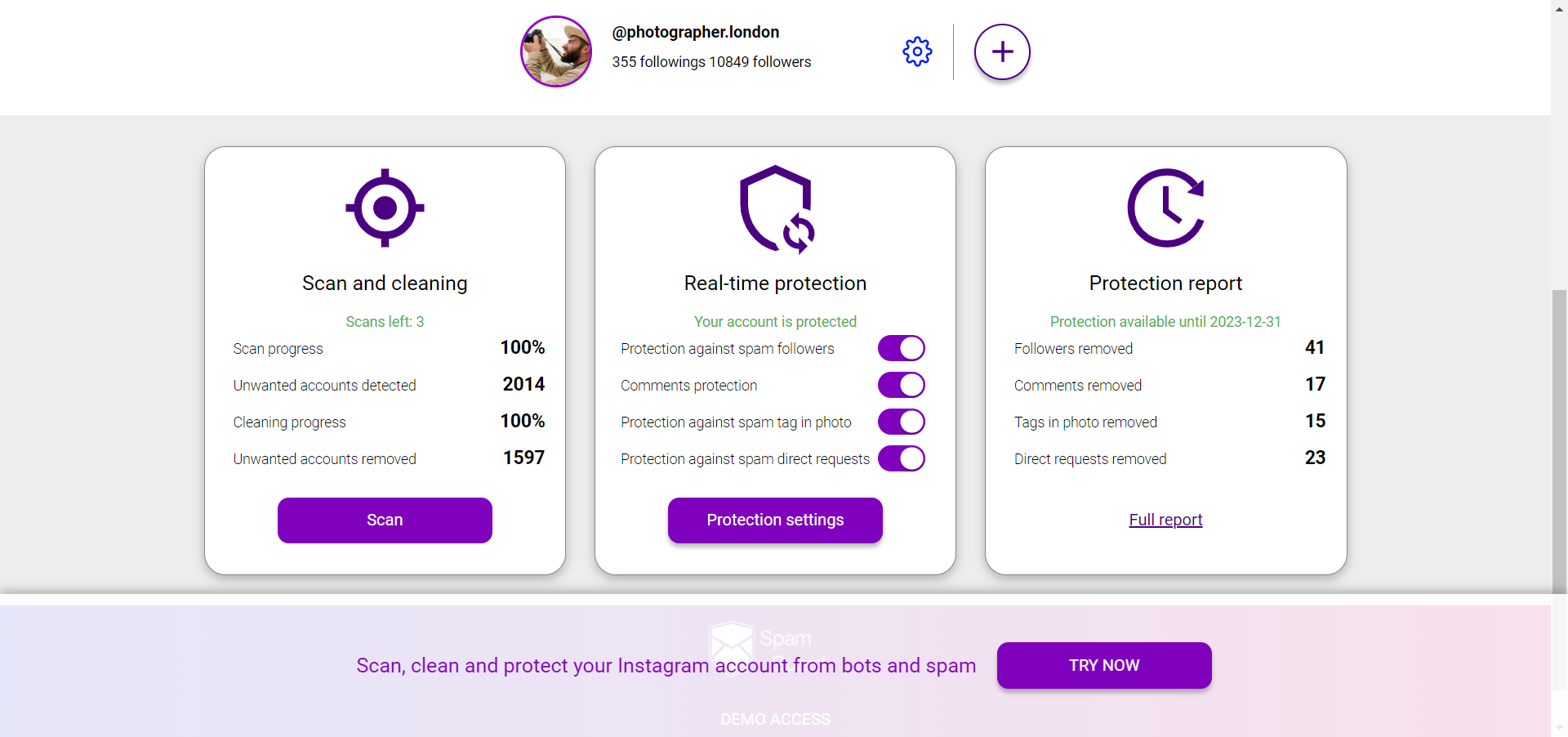
SpamGuard identifies ghost followers, bot accounts, and inactive profiles through behavioural analysis and removes them safely. After cleanup, the follower base more accurately represents the intended target audience, which means the algorithm receives cleaner signals and distributes content more effectively.
Run a free follower quality audit at SpamGuard to verify the audience built so far matches the intended target profile.
Conclusion
Finding a target audience on Instagram in 2026 is a research and validation process. Define the audience in behavioural terms, locate them in existing niche communities, create content that attracts and filters simultaneously, and periodically audit the follower base to ensure quality remains aligned with the strategy.
The audience quality foundation matters as much as the research process. Check your follower composition at spamguardapp.com.